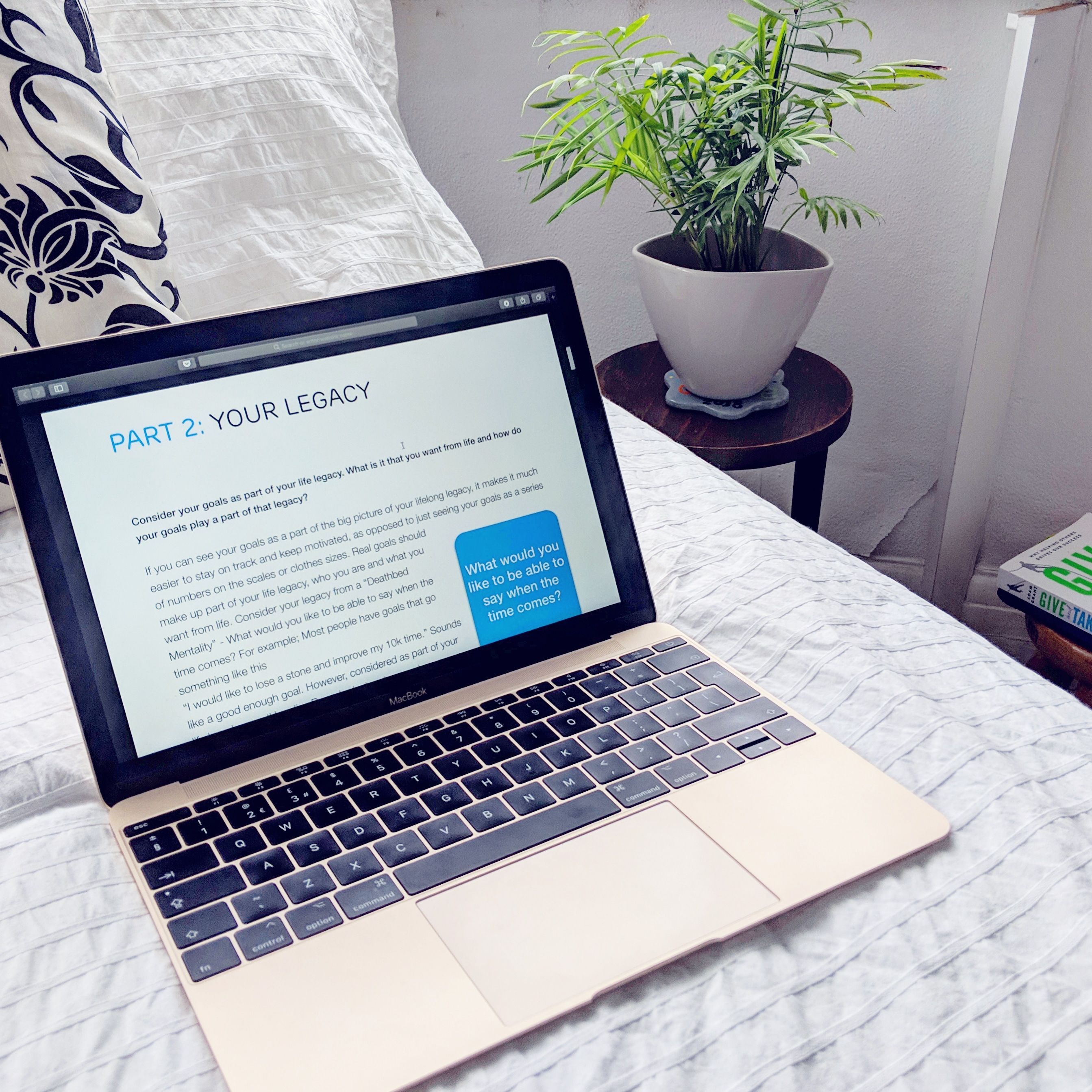
I’ve been made to think about this question in two very different situations in the past couple of months. The first time was when I started with my personal trainer. Alongside all the health declarations on the form I had to fill out was a couple of pages for me to reflect on what I would like my life legacy to be. It may sound morbid to some but I actually find it quite liberating. Now that I know what impact I want to have on the world that should help guide me with everything I do.
And the second time I’ve been prompted to think about my intentions was during a free online course called ‘The Self-Aware Coach‘. The course is aimed at those in leadership or coaching roles but in my opinion the content is just as valid for anyone and everyone because it’s largely based on self-awareness – and wouldn’t we all benefit from everyone being more self-aware?! Anyway, the course gets you to reflect on what your intention is in any given situation: is it to serve your own interests or is it to serve others?
Ever since I first came across Simon Sinek (author of Start With Why) I’ve tried to carry the ‘what’s my purpose’ thought with me in many situations, however I admit these have largely been at work. I had never really thought of doing that with my personal life too. So after this recent course and having to write down what I want my legacy to be for my PT here are my learning points and reflections.
1. Know your values and be intentional about life.
There are various different value ‘systems’ e.g.
- Egocentric – I’ll do what I want
- Traditional – do the right thing, obey higher authority
- Opportunistic – achieve, succeed, be the best, full of opportunities and competition
- Relational – community and wellbeing of everyone and the system
Everyone will have a different preference for one, or maybe fall within a few.
Know what your values are and then be intentional about living with them in mind – your interactions with others are an example of what you value.
2. It’s not about absolutes.
Simply put life is a journey, it’s not about being one thing or another. So next time you feel like you need to be the expert about something or you feel incompetent for not knowing something, remember that everything is a learning process. It’s a continuum. It doesn’t necessarily have fixed start and end points. Sometimes you’re further along that journey than other times – but wherever you are, that’s fine. Just be self-aware enough to know where you are.
3. It’s all in the mindset.
Applying mindset to your work:
Is it a job (a means to an end)? Is it a career (advancing yourself further up the ladder)? Or is it a passion or calling (a part of who you are and aligned to your values)?
I’ve learned a lot about mindset from Carol Dweck (author of Mindset) but I hadn’t really thought of it in this context before. It’s my choice how I view my work and I need to remember that.